Land Investment or Housing Investment?
In the investment world, real estate investment is examined in two main categories: housing investments and land investments. Both types of investment offer different advantages and risks; however, land investment has an increasingly growing appeal in today's dynamics. In this article, we address the main differences between the two types of investment and emphasise the advantages provided by land investment.
What Is Land Investment?
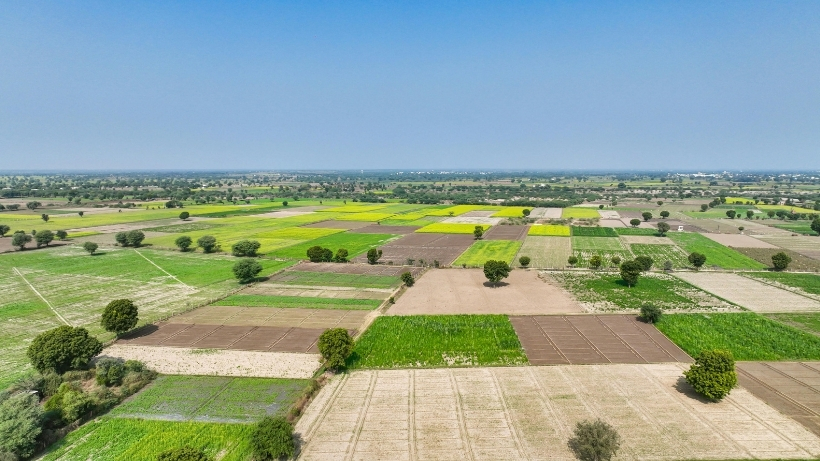
Land investment is investment made in the land itself, and it is the type of investment with the highest value-appreciation expectations. A road passes in front of your land, its value rises. The electricity and water line draws near, its value rises. Infrastructure investments are made in the region, consolidation or zoning work comes onto the agenda, its value rises again. In short, every nail driven into the region where your land is located is reflected in the value of your land. Moreover, unlike with housing, there are no maintenance costs, tenant problems or depreciation costs: you buy the land and wait. We explained the rationale of this approach in detail in our why land investment article.
How Can I Make My Own Land More Valuable?
The small touches you make to your land increase its value further. For example, surrounding your land with a wire fence or a stone wall reveals the shape of the parcel, gives it a tidier appearance and provides security for the things you will build or store on it. Another example: you can correct the slope or hollow in a certain part of your land by bringing in soil from outside. Such reasonable expenditures on the land return to you many times over at the sale stage.
Zoned Land or Agricultural Land?
The expectation from an investment is to obtain the most profitable return within the most suitable term. Zoned lands are more expensive than agricultural lands and their value appreciation occurs more slowly; because most of the expectations (road, electricity, water, zoning) are already reflected in the price. Agricultural land, on the other hand, is much more affordable since it has not yet been zoned, and there is more expectation to be purchased: every service that comes in the future means value appreciation. That is why, when it comes to profitability, we recommend agricultural lands.
Which Are the Most Profitable Agricultural Lands?
According to your budget, you should look for the following qualities in your field: it should be close to the village, offer partial construction rights if possible, and front onto an official road or be in the position of a second parcel to the road. There are significant price differences between parcels with and without an official road; if the most profitable investment with the lowest budget is targeted, the second parcel to the road may be a balanced choice. The fact that electricity and water have not yet reached the front of the parcel is an advantage in terms of leaving expectation to be acquired.
What Is Housing Investment?
Housing investment is the type of investment generally made in ready-built structures, carrying the expectation of rental income and value appreciation. However, many problems can be encountered here: tenant problems, depreciation and maintenance costs, tax obligations, insurance expenses... The lengthy duration of tenant-landlord lawsuits can deepen the problems; even selling a residence with a tenant in it is a matter of value debate in its own right. The prominent advantage of housing investment is that it provides regular returns in the short term through rent; however, when the total cost of ownership and the burden of effort are taken into account, land investment stands out for those seeking a long-term and trouble-free savings instrument.